Common Mistakes in Electronic Tax Systems
Problems in e-Invoice, e-Ledger and bank integration projects rarely come from the technology. The seven mistakes we see most often in the field, with a practical remedy for each.
E-invoicing and real-time reporting are no longer the concern of a few pioneering countries but of a wave stretching from Europe to the Gulf. A cross-regional view for SAP users operating in more than one country.
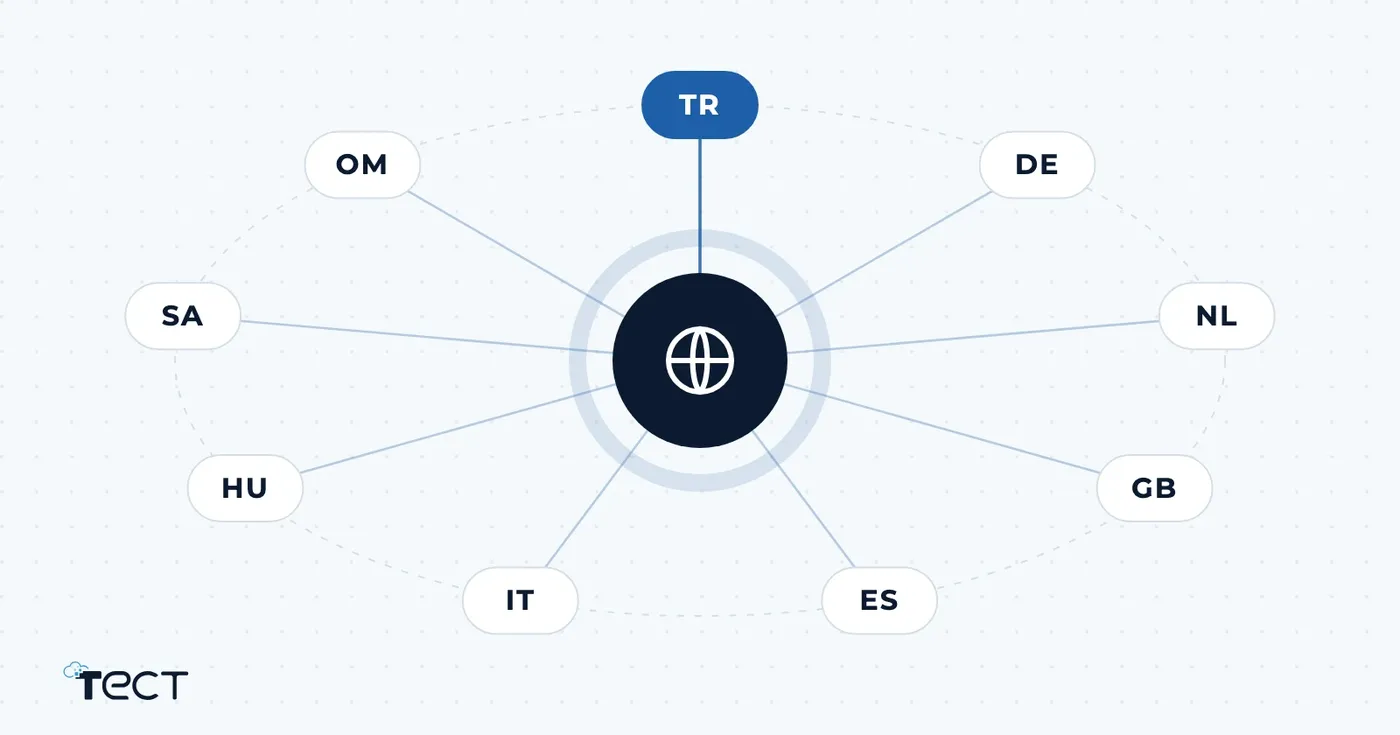
Digital tax systems arrive by different routes but head to the same place: the tax authority seeing the document in near real time. In practice three models stand out. In the clearance model the invoice goes to the tax authority first, is approved, then reaches the buyer; Türkiye, Italy and Saudi Arabia use this model. In the real-time reporting model the invoice flows between the parties and is reported to the authority at the same time; Hungary's NAV Online Számla and Spain's SII work this way. In the decentralized model the document standard and network are mandatory while the authority observes; Germany's B2B regime and Peppol-based countries belong here.
The European Union's “VAT in the Digital Age” (ViDA) package cleared the way for member states to impose their own e-invoicing mandates and set a common digital reporting timeline for cross-border transactions. Germany made receiving e-invoices mandatory in 2025, with issuing obligations phased in by company size. France and Poland follow the same road with their own central platforms, while Belgium applies its mandate over the Peppol network rather than a central platform; Spain's VERI*FACTU requires invoicing software to produce verifiable records. Italy has run a full clearance model with FatturaPA since 2019; Hungary's NAV Online Számla is one of Europe's most mature real-time reporting examples.
Saudi Arabia's ZATCA e-invoicing program, with its two phases (generation and integration), became the region's pioneer; the integration phase is rolling out wave by wave across taxpayer groups. Oman and the United Arab Emirates have announced their own programs, and the region is leaning toward a Peppol-based five-corner model. For companies operating in the Gulf this means a regime close to the clearance model familiar from Türkiye, but with different technical standards.
With e-invoicing that began in 2010, Türkiye is one of the earliest movers worldwide. Today e-Invoice, e-Archive, e-Waybill and e-Ledger run inside the same central structure, and scope keeps widening through turnover thresholds. The advantage for companies with Türkiye experience: the operational requirements of a clearance model (status tracking, rejection and cancellation flows, archiving) are already corporate habit, and that knowledge carries directly into global expansion.
Building a separate add-on, integration and maintenance cycle for every country is not sustainable. The right approach is to manage country regulation outside SAP in a single integration layer: the document is produced in SAP, country rules are applied in the layer, and the result is written back to SAP. TecT's architecture on SAP BTP was built on this logic; Türkiye, Germany, the Netherlands, the United Kingdom, Spain, Italy, Hungary, Saudi Arabia and Oman are among the countries supported today. We can map the regulatory timeline for the next country on your roadmap together.
Problems in e-Invoice, e-Ledger and bank integration projects rarely come from the technology. The seven mistakes we see most often in the field, with a practical remedy for each.
AI is no longer a showcase feature in tax and e-transformation; it is a layer that works inside daily operations, from document matching to anomaly detection. Where does it create real value on the SAP side, and where is care needed?
In a short call, we'll show how the topics in this article are handled in your own SAP landscape.