Common Mistakes in Electronic Tax Systems
Problems in e-Invoice, e-Ledger and bank integration projects rarely come from the technology. The seven mistakes we see most often in the field, with a practical remedy for each.
AI is no longer a showcase feature in tax and e-transformation; it is a layer that works inside daily operations, from document matching to anomaly detection. Where does it create real value on the SAP side, and where is care needed?
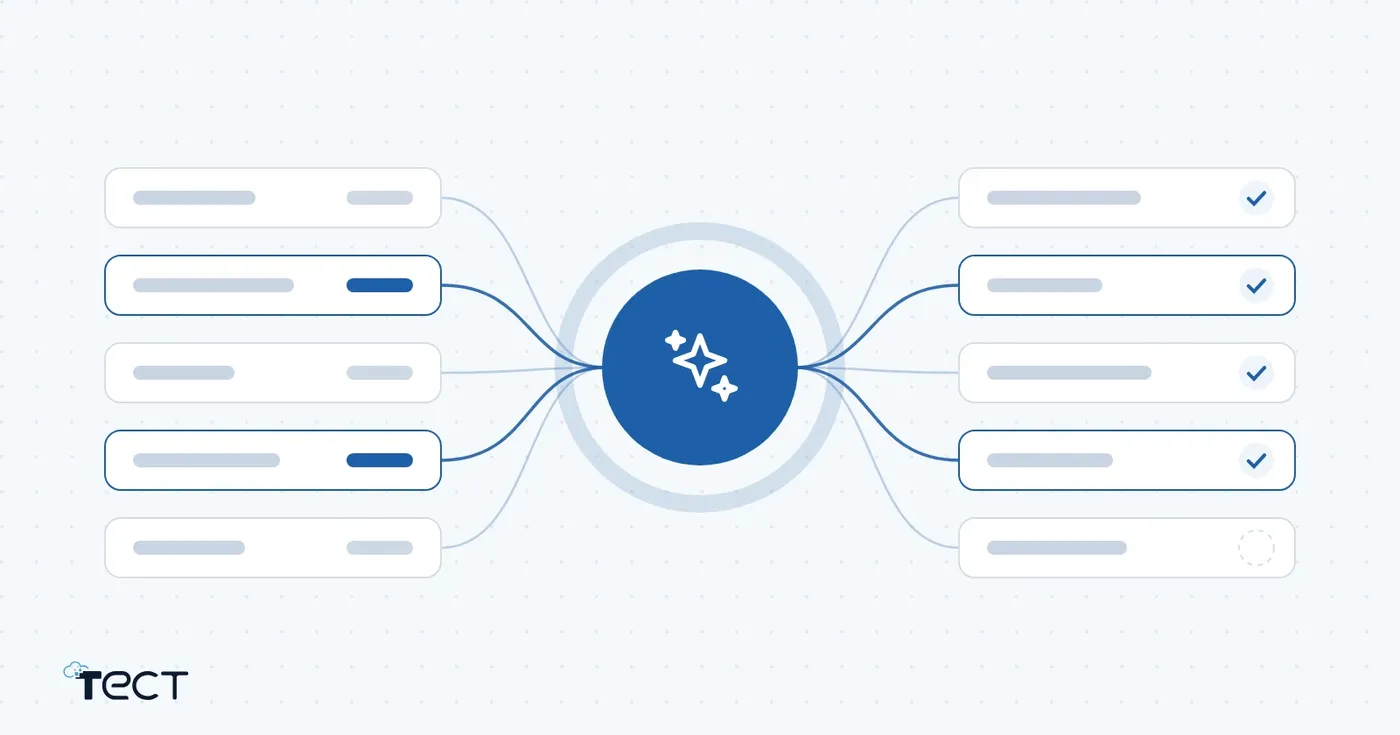
Processes such as e-Invoice, e-Ledger and bank integration have been automated with rules for years: the document must be in this format, this field must be filled, it must be sent before this date. Rules work very well in defined scenarios; the trouble begins with the undefined ones. A bank statement line with a non-standard description, a product name written differently by the supplier, the same invoice arriving twice. AI fills exactly this gap: it learns from examples and decides based on similarity and probability.
Tax processes do not tolerate errors, so the line between an AI suggestion and human approval must be clear. A well-designed system follows three principles. First, the model works only on the company's own product data; it never touches documents sent to the tax authority or the regulatory side. Second, every suggestion is shown with its reasoning; the user sees why a match is proposed. Third, an audit trail is kept; who approved or rejected which suggestion, and when, can always be answered.
The fastest return comes from high-volume processes with measurable error costs: posting bank statement lines and matching incoming invoices lead the list. In TecT products these capabilities are not a separate tool; they work inside the e-Invoice, e-Banking and e-Waybill modules, need no additional development on the SAP side and are also available on mobile through TecT App.
Problems in e-Invoice, e-Ledger and bank integration projects rarely come from the technology. The seven mistakes we see most often in the field, with a practical remedy for each.
E-invoicing and real-time reporting are no longer the concern of a few pioneering countries but of a wave stretching from Europe to the Gulf. A cross-regional view for SAP users operating in more than one country.
In a short call, we'll show how the topics in this article are handled in your own SAP landscape.